DIY Essential Oil Room Sprays: 6 Recipes for Every Room
How Room Sprays Work
Essential oil room sprays are a simple, effective way to fragrance your home naturally without the synthetic chemicals found in commercial air fresheners. When you spray a fine mist into the air, the tiny droplets evaporate rapidly, releasing aromatic compounds that fill the room. Unlike plug-in diffusers, sprays give you instant fragrance precisely where and when you want it.
The science is straightforward: essential oils are hydrophobic (they do not dissolve in water), so you need an emulsifier to help them disperse evenly. Without one, the oils float on top of the water and you get an uneven spray — sometimes a blast of concentrated oil, sometimes plain water. A good emulsifier ensures that every spray delivers a consistent, pleasant burst of fragrance.
Choosing Your Emulsifier
There are several options for helping essential oils disperse in water. Each has its own advantages:
- Witch hazel — the most popular choice. Alcohol-free witch hazel works well and adds a light astringent quality. Use it at a ratio of roughly 1 part witch hazel to 3 parts distilled water.
- Vodka (40% ABV or higher) — the alcohol helps dissolve essential oils effectively. It evaporates quickly, leaving no residual scent. Use at the same ratio as witch hazel.
- Polysorbate 20 — a cosmetic-grade solubiliser that fully dissolves essential oils in water for a clear, professional-looking spray. Use 1 part polysorbate 20 to 1 part essential oil blend, then add to water.
- Rubbing alcohol (isopropyl alcohol, 70%) — effective but has a strong initial odour. Best for cleaning-oriented sprays rather than fine fragrance applications.
For the recipes in this guide, witch hazel is used as the default emulsifier. You may substitute vodka or polysorbate 20 using the ratios above.
Base Room Spray Recipe
Every room spray in this guide follows the same fundamental recipe. Master this base and you can create endless variations simply by changing the essential oil blend.
Base ingredients (for a 100 ml spray bottle):
- 75 ml distilled water (tap water can harbour bacteria and shorten shelf life)
- 25 ml witch hazel (or vodka)
- 20–30 drops essential oil blend (see individual recipes below)
Method:
- Add the witch hazel to the spray bottle first.
- Add the essential oils and swirl gently to combine.
- Add the distilled water.
- Secure the spray nozzle and shake vigorously for 10 seconds.
- Shake well before each use, as natural separation is normal.
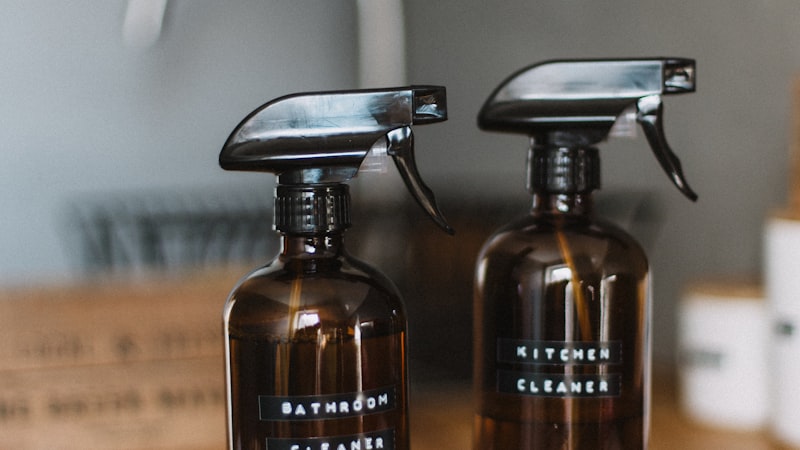
Use dark glass bottles where possible, as sunlight degrades essential oils over time. Amber or cobalt blue glass spray bottles are readily available from craft suppliers and online retailers.
Recipe 1: Relaxing Bedroom Spray
A calming blend designed to promote relaxation and restful sleep. Spray onto pillows and bed linen 15–30 minutes before bedtime, allowing the fragrance to settle.
Essential oil blend (for 100 ml):
- 12 drops lavender essential oil
- 6 drops cedarwood essential oil
- 4 drops bergamot essential oil
- 3 drops ylang-ylang essential oil
Lavender is the cornerstone of this blend, supported by research showing its positive effects on sleep quality. Cedarwood adds a warm, grounding base note, while bergamot provides a subtle citrus lift that prevents the blend from becoming too heavy. Ylang-ylang contributes a soft floral sweetness.
Recipe 2: Energising Morning Spray
A bright, invigorating spray to freshen living spaces in the morning. Use in the kitchen, hallway, or home office to set an energetic tone for the day.
Essential oil blend (for 100 ml):
- 10 drops sweet orange essential oil
- 8 drops peppermint essential oil
- 5 drops lemon essential oil
- 3 drops rosemary essential oil
Citrus oils provide an instant uplifting effect, while peppermint sharpens focus and alertness. Rosemary adds an herbal depth and has been associated with improved memory and concentration in aromatherapy research.
Recipe 3: Fresh Linen Spray
A clean, airy scent perfect for freshening towels, curtains, sofas, and stored clothing. This blend mimics the smell of line-dried laundry with a botanical twist.
Essential oil blend (for 100 ml):
- 10 drops lavender essential oil
- 8 drops lemon essential oil
- 4 drops tea tree essential oil
- 3 drops eucalyptus essential oil
The lavender and lemon combination creates a classically fresh scent. Tea tree and eucalyptus add a clean, slightly medicinal undertone and contribute mild antimicrobial properties. Spray onto fabrics from a distance of 20–30 cm to avoid spotting.
Note: Always test on an inconspicuous area of fabric first. Essential oils, particularly citrus oils, can occasionally stain delicate fabrics.
Recipe 4: Kitchen Deodoriser Spray
Kitchens are prone to lingering cooking odours, especially from frying, curry, and fish. This spray neutralises and replaces unwanted smells with a fresh, clean fragrance.
Essential oil blend (for 100 ml):
- 10 drops lemon essential oil
- 8 drops eucalyptus essential oil
- 5 drops peppermint essential oil
- 3 drops tea tree essential oil
Lemon and eucalyptus are powerful deodorising agents. Peppermint adds a sharp freshness, and tea tree contributes antibacterial support. Spray into the air rather than onto surfaces, and avoid spraying near open flames or hot hobs.
Recipe 5: Bathroom Refresher Spray
A spa-like blend that keeps bathrooms smelling fresh and clean between cleans. Particularly effective for small, enclosed bathrooms with limited ventilation.
Essential oil blend (for 100 ml):
- 10 drops eucalyptus essential oil
- 8 drops peppermint essential oil
- 5 drops tea tree essential oil
- 3 drops lemon essential oil
The eucalyptus and peppermint combination creates a spa-like atmosphere, while tea tree contributes antifungal and antibacterial properties well suited to the damp bathroom environment. Spray after use or as needed throughout the day.
Recipe 6: Natural Insect Repellent Spray
A DEET-free alternative for deterring mosquitoes, flies, and other nuisance insects. Use around doorways, windows, and outdoor seating areas during warmer months.
Essential oil blend (for 100 ml):
- 10 drops citronella essential oil
- 8 drops lemongrass essential oil
- 5 drops eucalyptus essential oil (or lemon eucalyptus for stronger repellent action)
- 3 drops peppermint essential oil
Citronella and lemongrass are among the most widely studied natural insect repellents. Lemon eucalyptus (Corymbia citriodora) has been recognised by public health agencies as an effective mosquito repellent. Peppermint adds deterrent power against ants and spiders. Reapply every 1–2 hours for best effect outdoors.
Important: This spray is intended for use on surfaces and in the air, not directly on skin. For a skin-safe insect repellent, a different formulation with proper carrier oils and lower essential oil concentrations is required.
Tips for the Best Room Sprays
- Always use distilled or filtered water. Tap water contains minerals and microorganisms that can cause the spray to spoil more quickly.
- Shake the bottle vigorously before every use. Essential oils and water naturally separate.
- Use dark glass bottles to protect the oils from UV degradation. Avoid plastic bottles, as essential oils can degrade certain plastics.
- Store in a cool, dark place. Room sprays will keep for 2–3 months.
- Start with fewer drops and increase if you prefer a stronger scent. It is easier to add more than to reduce an overpowering fragrance.
- For a finer mist, use spray bottles with a high-quality atomiser nozzle.
Safety Considerations
- Avoid spraying directly onto polished wood, leather, or delicate fabrics, as essential oils can cause staining or surface damage.
- Do not spray near open flames or heat sources.
- Keep room sprays out of reach of children and pets.
- Essential oils, particularly eucalyptus and tea tree, are toxic to cats. Use these sprays only in well-ventilated rooms where cats are not confined.
- Citrus essential oils (lemon, sweet orange, bergamot) can be phototoxic. Avoid spraying onto skin before sun exposure.
- If anyone in the household has asthma or respiratory sensitivities, introduce room sprays gradually and in small amounts.
Frequently Asked Questions
How long do homemade room sprays last?
Why do I need to shake the spray before each use?
Can I use tap water instead of distilled water?
Will room sprays stain fabrics?
Are essential oil room sprays safe around pets?
Can I use essential oil room sprays in the car?
What is polysorbate 20 and why would I use it?
Can I mix different recipes together?
Stay Updated
Get the latest essential oil guides, DIY recipes, and wellness tips delivered to your inbox.
No spam. Unsubscribe anytime.